Many publishers print thousands of books in advance and store them in warehouses, hoping that the stock will sell over time. But when demand is lower than expected, the books remain unsold, warehouse space gets occupied, and a large amount of working capital becomes blocked.
This traditional production model often creates several challenges for publishing businesses, including excess inventory, storage expenses, delayed payments, credit sales, damaged books, and outdated editions.
The Problem with Large Book InventoriesPrinting 5,000, 10,000, or even 20,000 copies in advance may appear economical, but it also increases financial risk. Publishers must invest in paper, printing, binding, packaging, transportation, and storage before receiving confirmed customer orders.
- Capital remains blocked in unsold books
- Warehouse and storage costs continue to increase
- Books may become outdated or damaged
- Publishers may be forced to sell on credit
- Cash flow becomes difficult to manage
- Unsold inventory reduces overall profitability
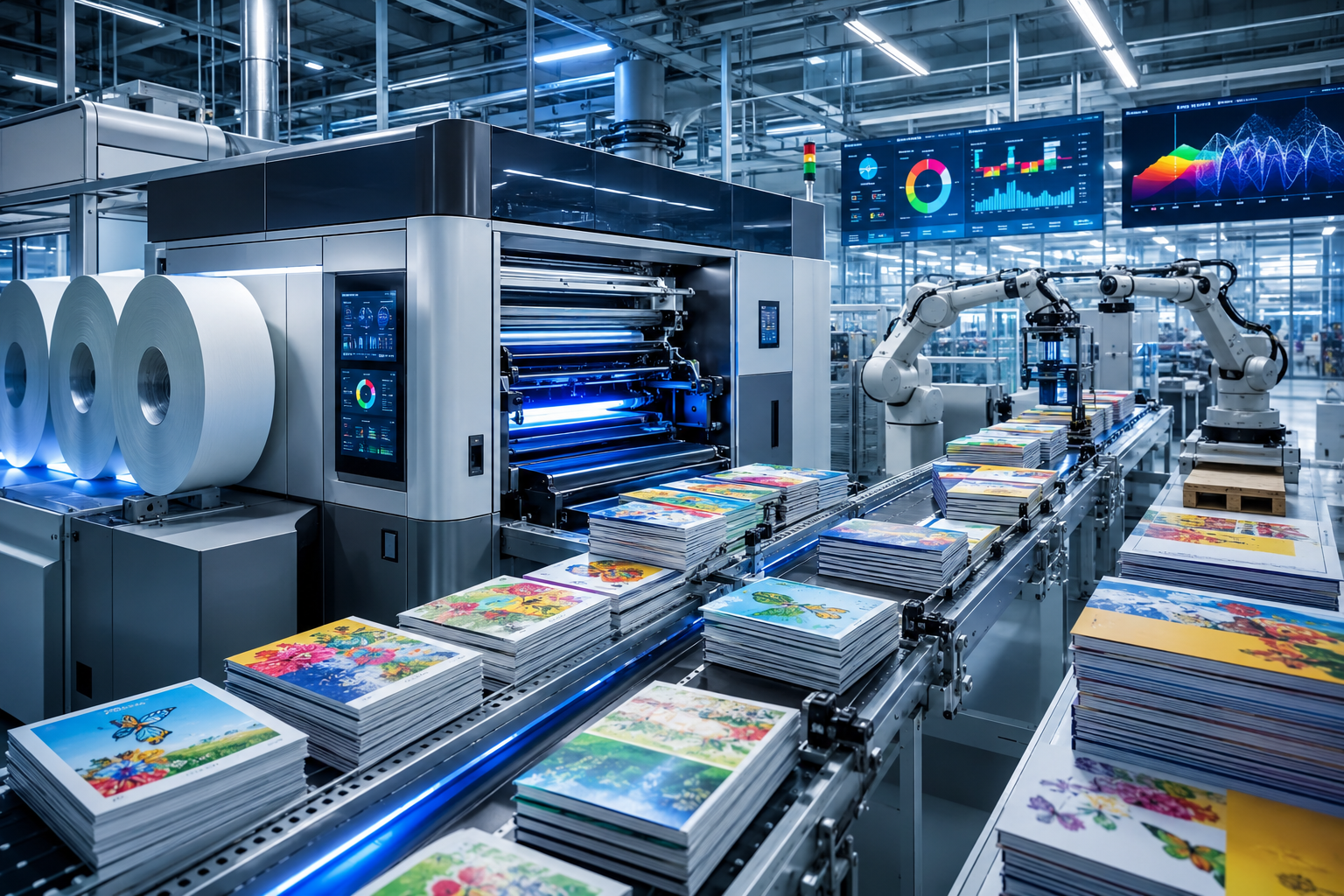
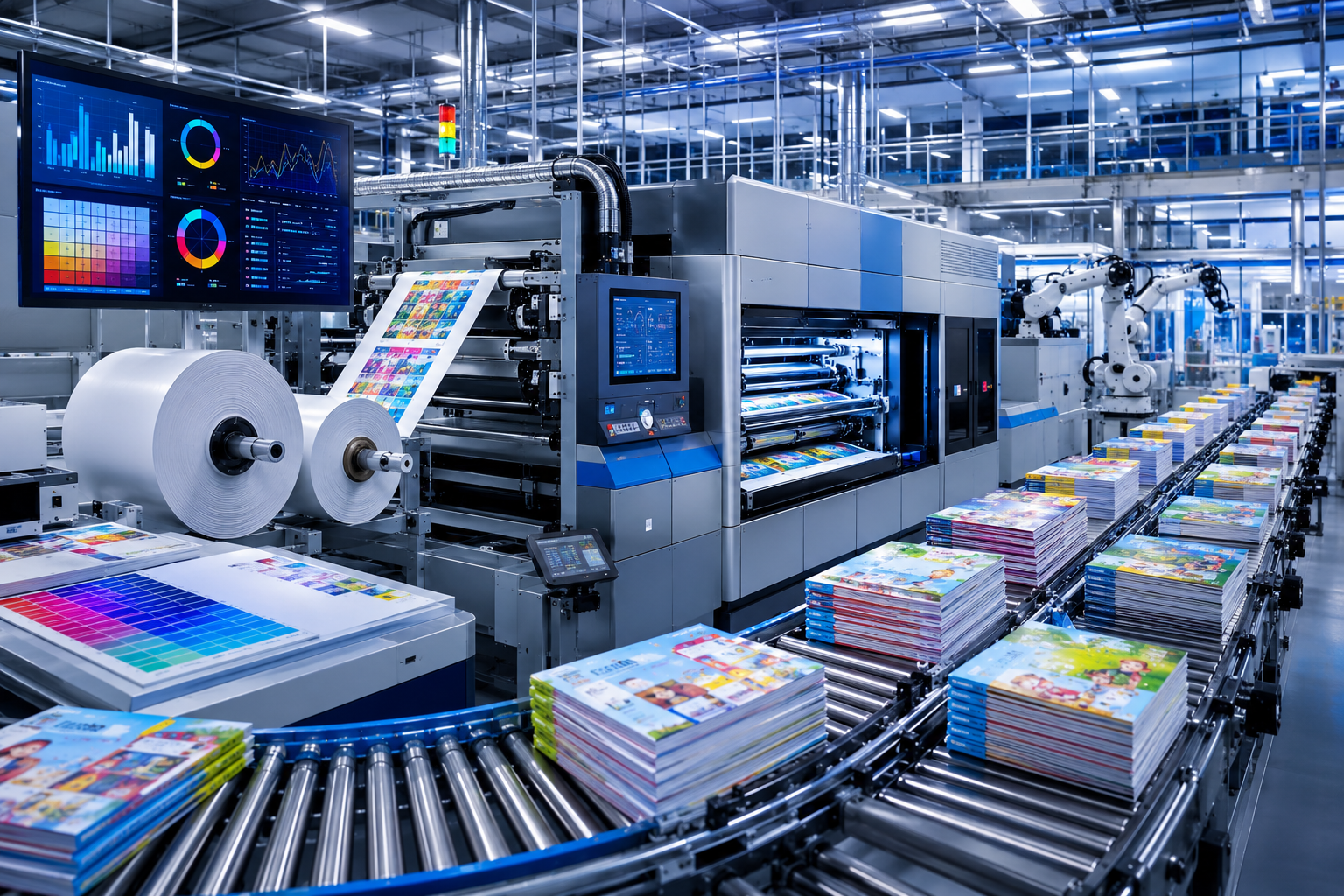
Modern digital book production technology offers a smarter alternative. Instead of printing large quantities in advance, publishers can keep high-quality white paper in stock and produce books only after receiving confirmed orders.
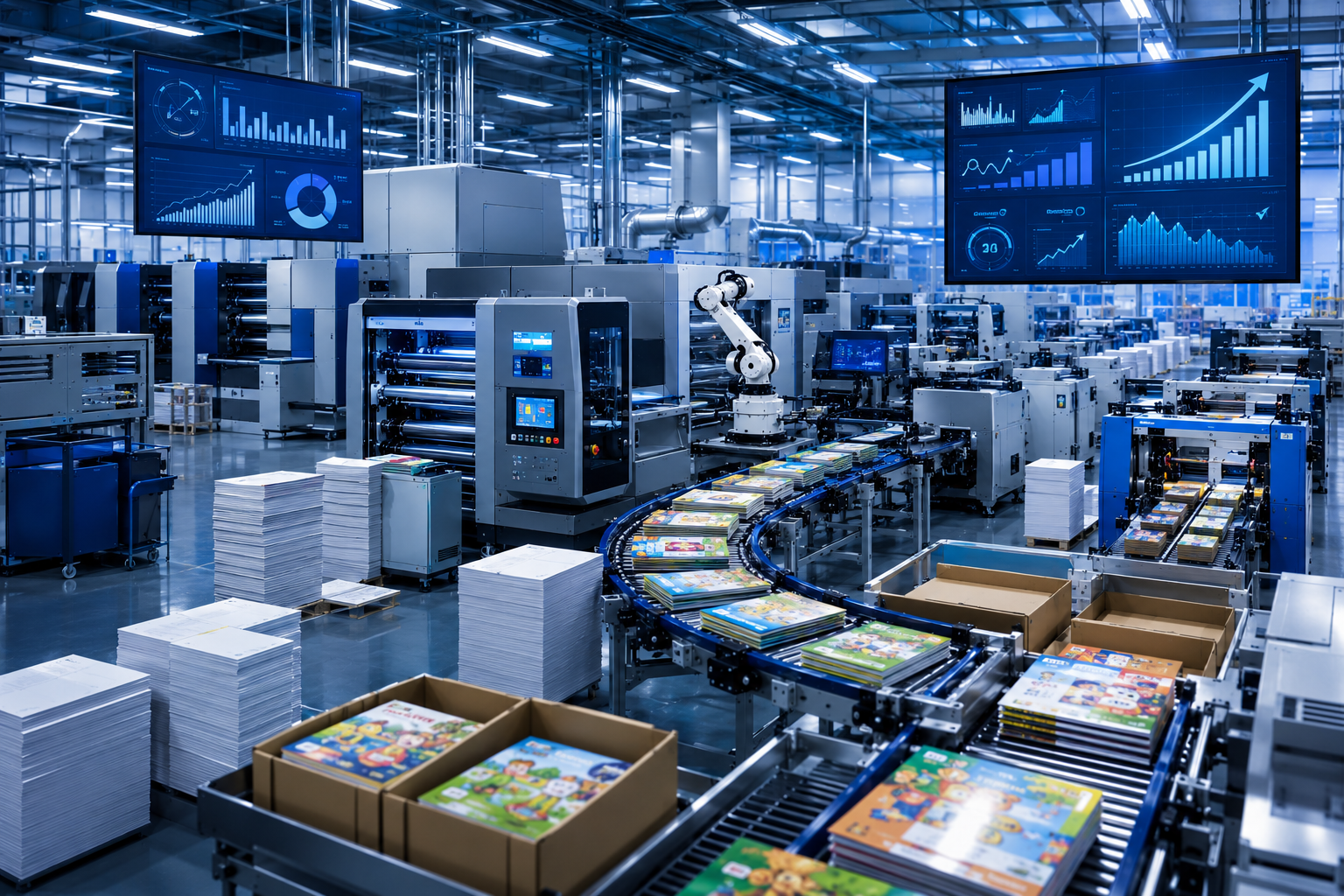
With a properly planned high-speed digital production setup, books can be printed, finished, packed, and dispatched according to actual market demand.
How the Print-on-Demand Model Works- Maintain a stock of quality white paper
- Store approved book files digitally
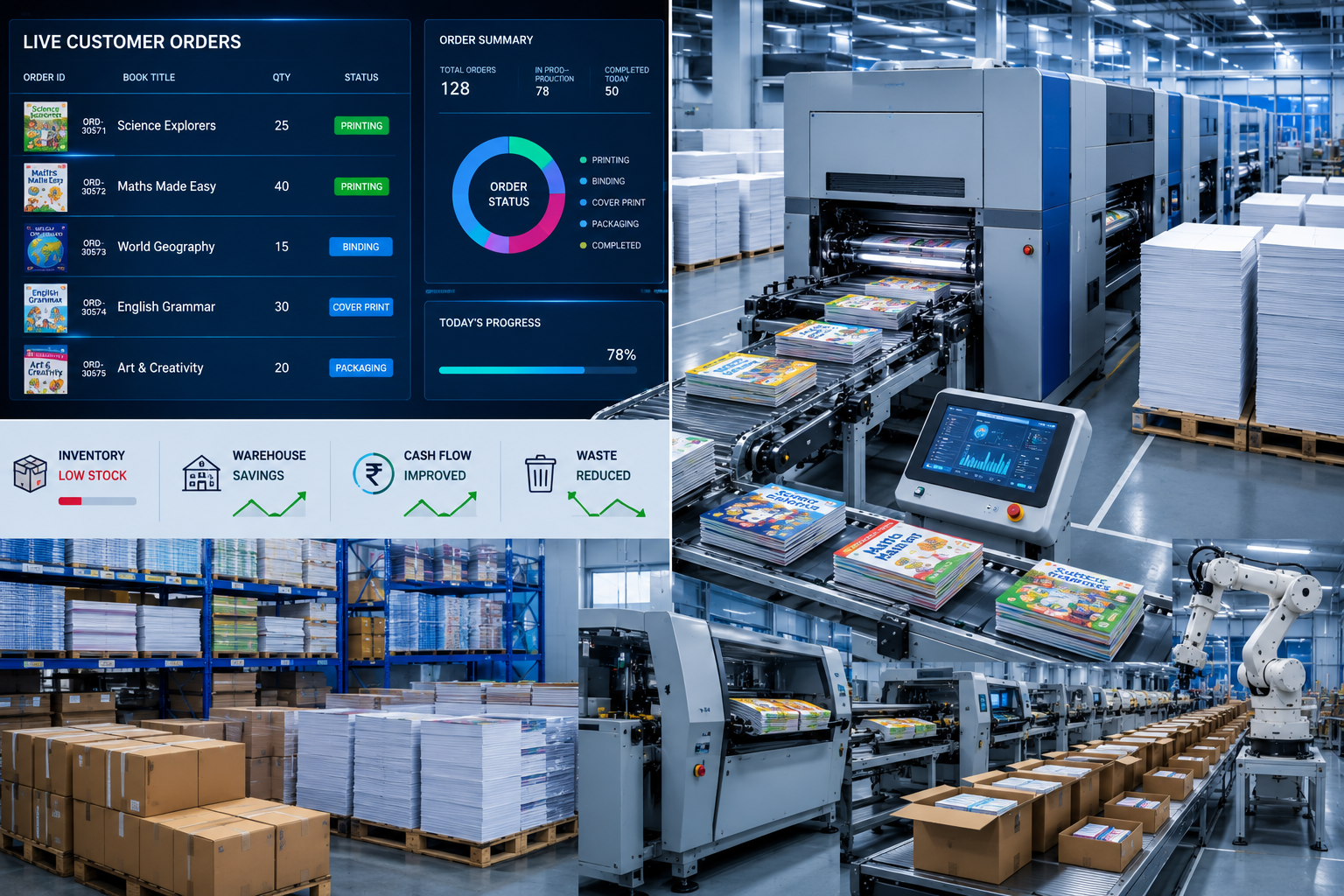
- Receive confirmed customer or distributor orders
- Print the required quantity immediately
- Complete finishing and binding
- Dispatch books without unnecessary inventory
This production model allows publishers to manufacture books in smaller, more manageable quantities while maintaining speed, quality, and consistency.
Major Benefits for Publishers- No need to store thousands of finished books
- Lower warehouse and inventory costs
- Reduced risk of unsold or outdated stock
- Less working capital blocked in inventory
- Better cash-flow management
- Reduced dependence on credit sales
- Faster response to changing market demand
- Greater flexibility for updated editions
- Improved profitability and business control
In the traditional model, publishers invest money first and wait for books to sell later. In the print-on-demand model, production is closely connected to confirmed demand. This significantly reduces financial pressure and helps businesses use their capital more efficiently.
Publishers can also avoid overproduction and redirect their funds toward marketing, content development, distribution, technology, and business expansion.
Ideal for Educational and Commercial PublishingPrint-on-demand production is especially useful for businesses that manage a large number of titles, frequently update content, or experience seasonal demand.
- Educational publishers
- School-book publishers
- Competitive-exam book publishers
- Self-publishing companies
- Academic publishers
- Corporate training publishers
- Government publication projects
- Regional-language publishers
Educational and professional books often require regular updates. When thousands of copies of an old edition are stored in a warehouse, launching a revised edition becomes difficult and expensive.
Digital print-on-demand production allows publishers to update files quickly and print the latest edition without worrying about large quantities of outdated stock.
The Future of Publishing Is Demand-Based ProductionThe publishing industry is moving toward faster, more flexible, and technology-driven production. Businesses that adopt print-on-demand systems can respond to market demand more efficiently while reducing waste and financial risk.
Publishers that make this transition today will be better prepared to compete, grow, and remain profitable in the coming years.
Partner with Edit One InternationalEdit One International helps publishers and commercial printing businesses understand and implement advanced digital book production solutions. Our team can guide you in planning a high-speed production setup that supports efficient, demand-based book manufacturing.
Book a Live DemonstrationIf you want to reduce excess inventory, improve cash flow, lower warehouse expenses, and prepare your publishing business for the future, contact the Edit One International sales team and schedule a live technology demonstration.
ConclusionPrinting thousands of books before receiving orders is no longer the only option. With modern print-on-demand technology, publishers can produce the required quantity at the right time, reduce risk, protect working capital, and operate a more profitable publishing business.