How High-Speed Book Printing Machines Increase Publishing Profitability
Profitability in the publishing industry depends on much more than selling a large number of books. Publishers must also control printing costs, minimise waste, complete orders on time, manage inventory efficiently, and use their working capital carefully.
Modern high-speed digital book printing technology helps publishers improve all these areas. It allows businesses to produce quality books faster, manufacture quantities according to actual demand, and reduce their dependence on large advance print runs.
The Limitations of Traditional Book Production
Traditional book production often requires publishers to print thousands of copies before confirmed demand is available. Although large-volume production may reduce the apparent cost per copy, it can also create serious financial and operational risks.
- Large amounts of money become blocked in finished inventory
- Unsold books occupy valuable warehouse space
- Older editions may become outdated
- Books may be damaged during long-term storage
- Publishers may be forced to offer longer credit periods
- Slow-moving stock can reduce overall profitability
A business may appear to have a large quantity of assets in its warehouse, but those books do not generate revenue until they are sold and payments are collected.
Faster Production Means Faster Order Fulfilment
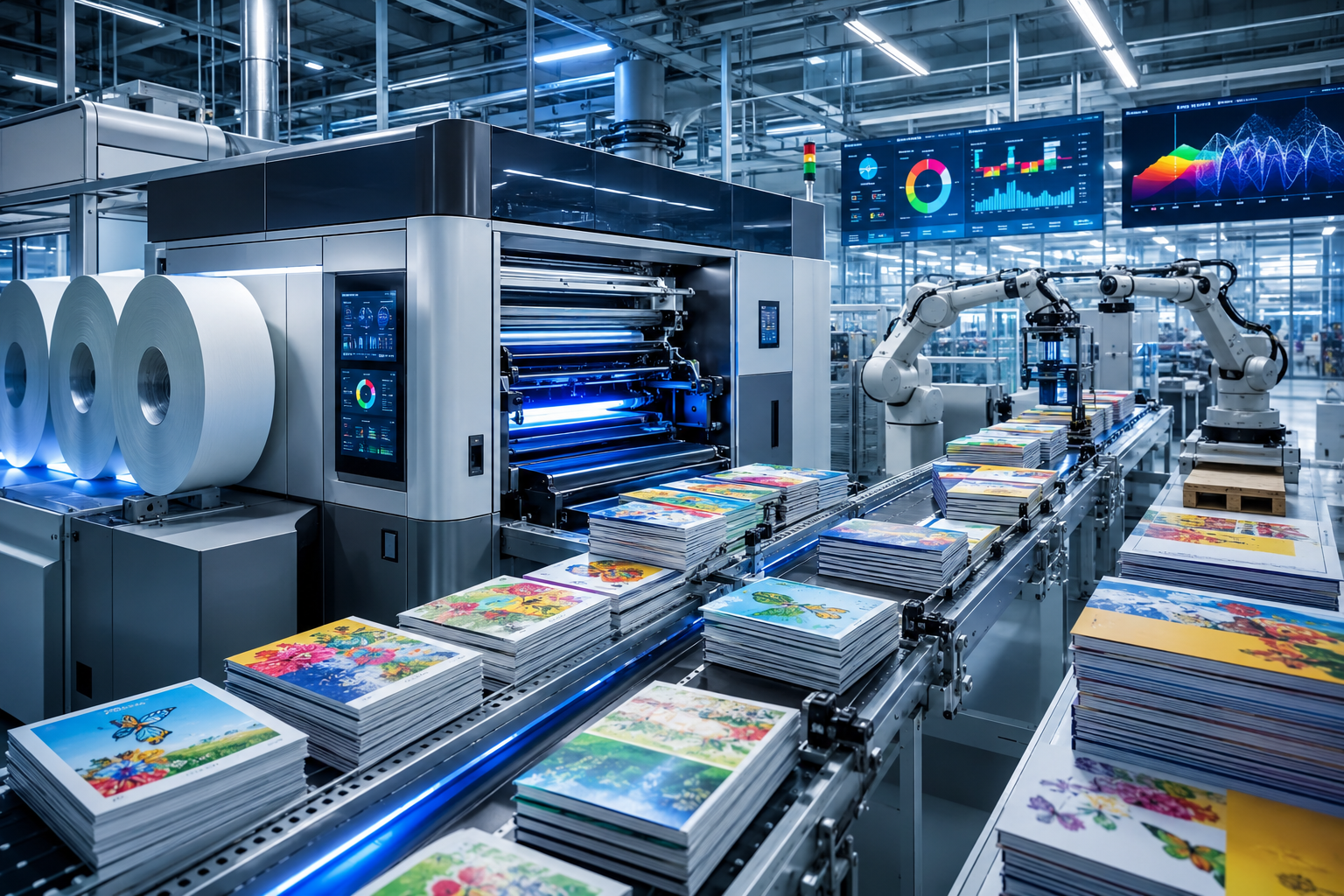
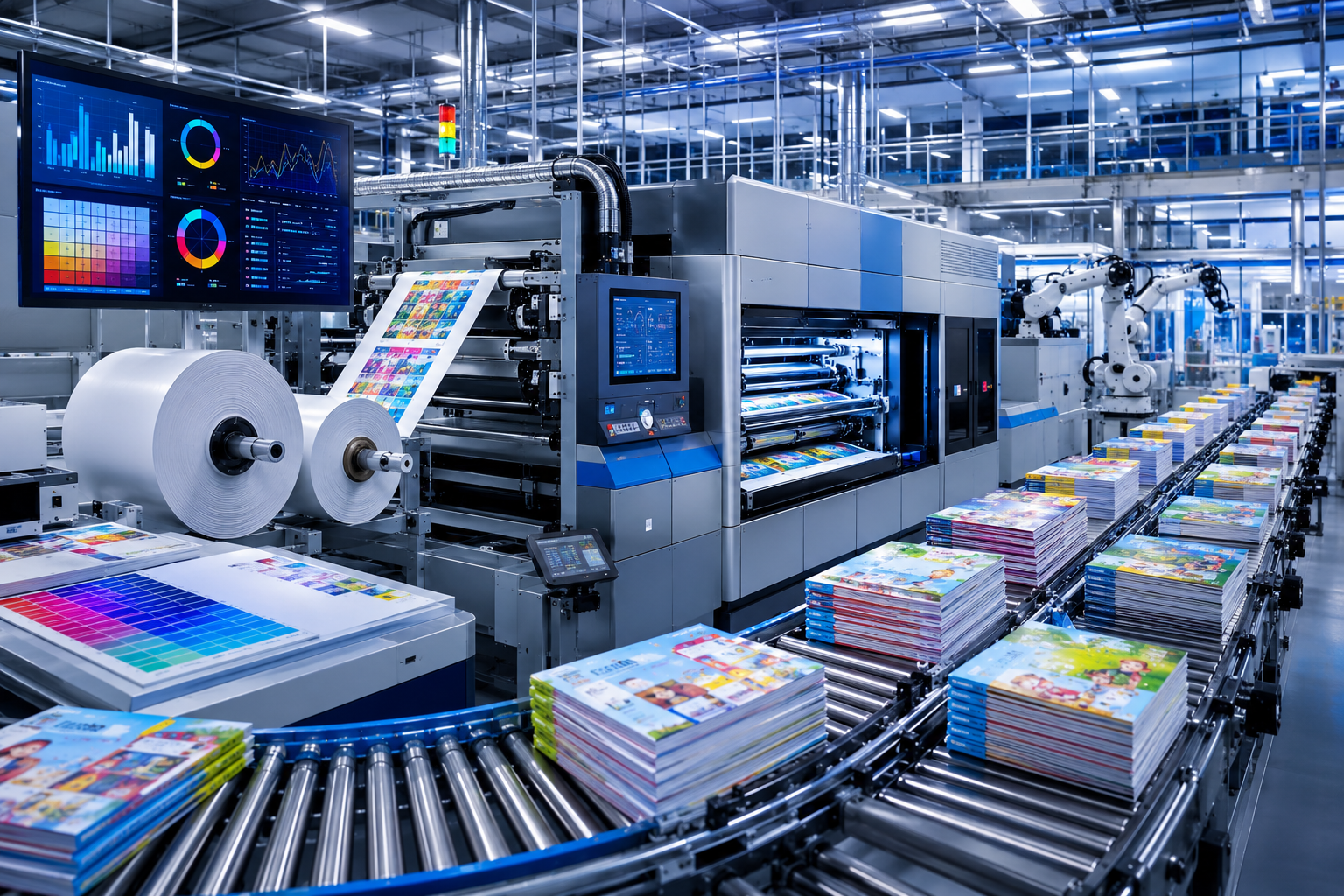
High-speed digital book printing machines significantly reduce the time required to convert a print-ready file into a finished book. Publishers can respond to customer, school, distributor, and institutional orders without waiting for lengthy production cycles.
Faster order fulfilment can improve customer satisfaction, strengthen distributor relationships, and help publishers accept time-sensitive projects that may be difficult to manage with slower production systems.
Print According to Actual Demand
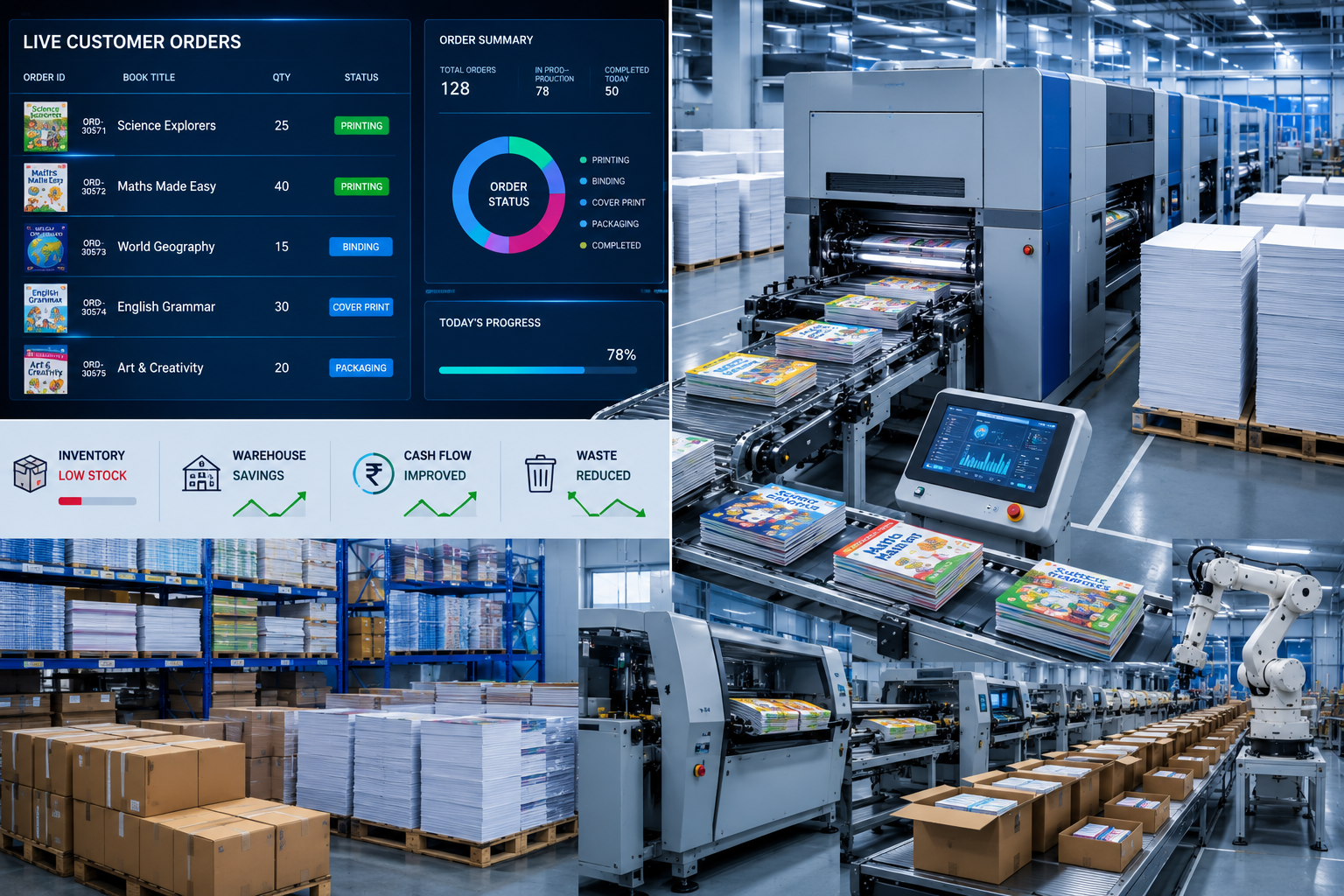
One of the biggest advantages of digital book production is the ability to print the required quantity when an order is received. Publishers no longer need to manufacture thousands of copies of every title in advance.
Instead, they can maintain quality white paper, digitally store approved book files, and begin production according to confirmed requirements.
- Print small quantities for new titles
- Produce additional copies when demand increases
- Avoid overproduction of slow-moving books
- Test market demand before committing to a large quantity
- Maintain a wider catalogue without storing every title
Lower Inventory and Warehouse Expenses
Warehousing thousands of finished books requires space, staff, racks, handling, security, transportation, and inventory management. These expenses continue even when books are not selling.
Demand-based digital production can reduce the number of finished books stored in a warehouse. This allows publishers to use smaller storage facilities, reduce handling costs, and redirect resources towards marketing, content development, distribution, and business growth.
Better Use of Working Capital
Working capital is essential for every publishing business. When a large amount of money is invested in unsold books, the publisher may have fewer funds available for new projects, author payments, paper purchases, marketing campaigns, and operational expenses.
High-speed digital book production supports a more efficient financial model. Businesses can manufacture books closer to the time of sale, reducing the gap between production expenditure and revenue collection.
Reduced Risk of Outdated Editions
Educational, professional, technical, and competitive-exam books often require regular updates. Changes in curriculum, examination patterns, regulations, pricing, or information can make an older edition difficult to sell.
With digital production, publishers can update the print file and produce the latest edition without worrying about thousands of old copies remaining in storage.
- Correct errors before the next production batch
- Update curriculum-related information
- Revise cover designs and pricing
- Add new chapters or learning material
- Launch improved editions more quickly
Reduced Paper and Production Waste
Overproduction creates waste when books remain unsold, become damaged, or are replaced by updated editions. Digital book printing helps businesses manufacture quantities based on real requirements, reducing unnecessary paper consumption and disposal.
Lower waste does not only support cost control. It also helps publishers operate with a more responsible and efficient production model.
Profitable Short-Run Book Printing
Many publishers manage titles that have valuable but limited demand. These may include regional-language books, specialised academic titles, training manuals, customised books, institutional publications, or books by new authors.
High-speed digital printing makes it practical to produce these titles in smaller quantities. Publishers can serve specialised markets without committing large amounts of money to inventory.
Opportunity to Manage More Titles
In a traditional inventory-based model, adding every new title increases storage and financial pressure. With digital files and demand-based production, publishers can maintain a larger catalogue while keeping lower quantities of finished stock.
This provides opportunities to serve more authors, subjects, classes, languages, industries, and customer segments without creating an equally large increase in warehouse inventory.
Consistent Quality Across Production Runs
Modern digital production systems are designed to deliver consistent text, images, and colour output across repeated jobs. Once a book file and its production settings are approved, additional copies can be produced when required.
This consistency is especially important for educational publishers, institutional projects, training material, and branded publications where quality must remain reliable across different production batches.
Who Can Benefit from High-Speed Digital Book Printing?
- Educational book publishers
- School and college publishers
- Competitive-exam publishers
- Commercial printing companies
- Self-publishing businesses
- Corporate training organisations
- Government publication suppliers
- Regional-language publishers
- Print-on-demand service providers
A Smarter Publishing Business Model
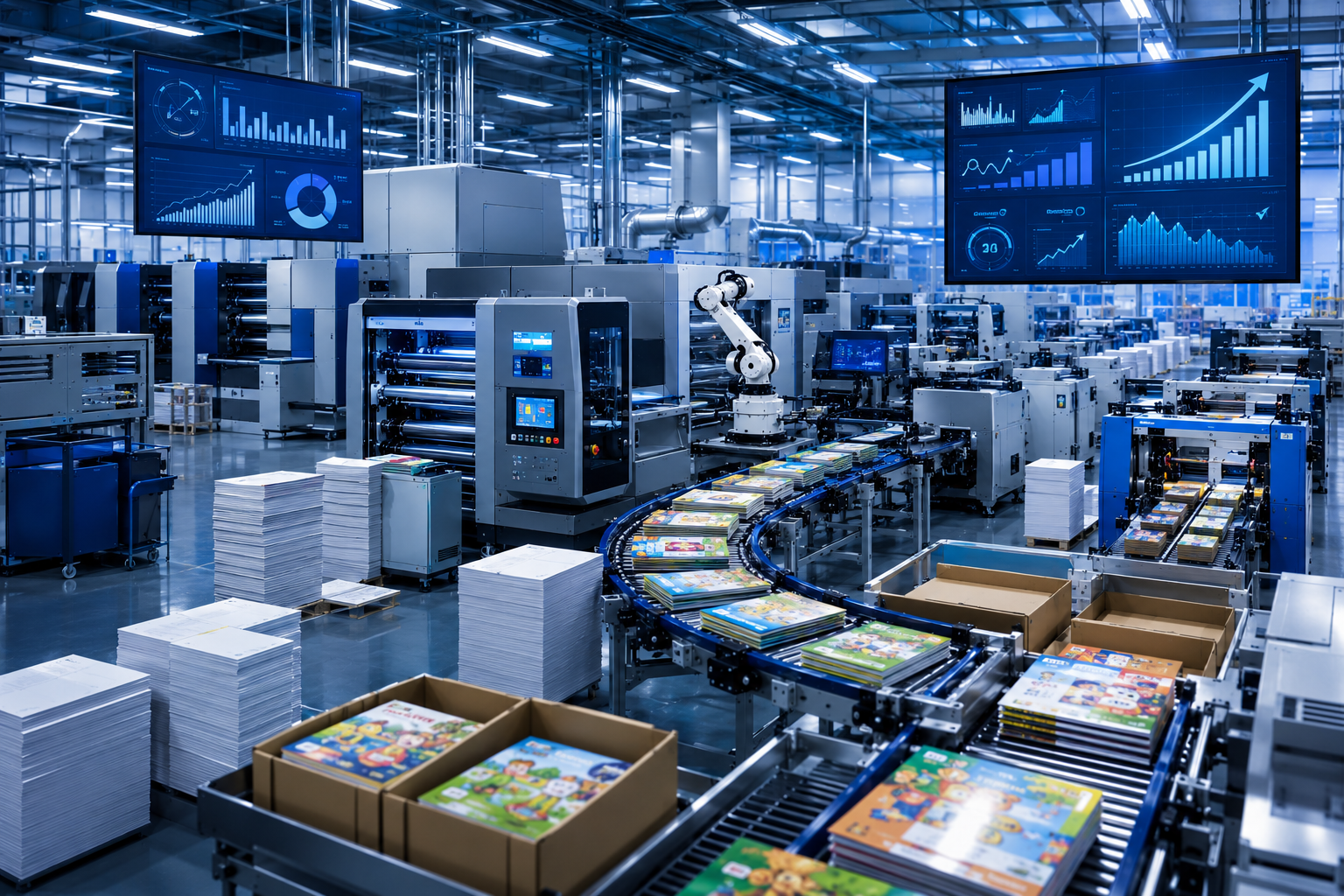
The real value of high-speed digital printing is not limited to printing faster. It helps publishers build a more flexible and financially controlled production system.
- Produce books according to confirmed demand
- Complete urgent orders more quickly
- Reduce money blocked in inventory
- Lower storage and handling expenses
- Update editions without major stock losses
- Serve both small and large orders
- Improve cash-flow management
- Increase the earning potential of each title
Partner with Edit One International
Edit One International helps publishers and commercial printing businesses explore modern digital book production solutions. Our team can guide you in understanding production workflows, equipment requirements, business applications, and the benefits of adopting a demand-based printing model.
Book a Live Demonstration
If you want to reduce production delays, control inventory, improve cash flow, and increase the profitability of your publishing business, contact the Edit One International sales team and schedule a live demonstration of high-speed digital book production technology.
Conclusion
High-speed digital book printing can help publishers move from an inventory-heavy business model to a faster and more flexible production system. By printing according to actual demand, reducing waste, controlling storage expenses, and completing orders quickly, publishing businesses can improve both operational efficiency and long-term profitability.