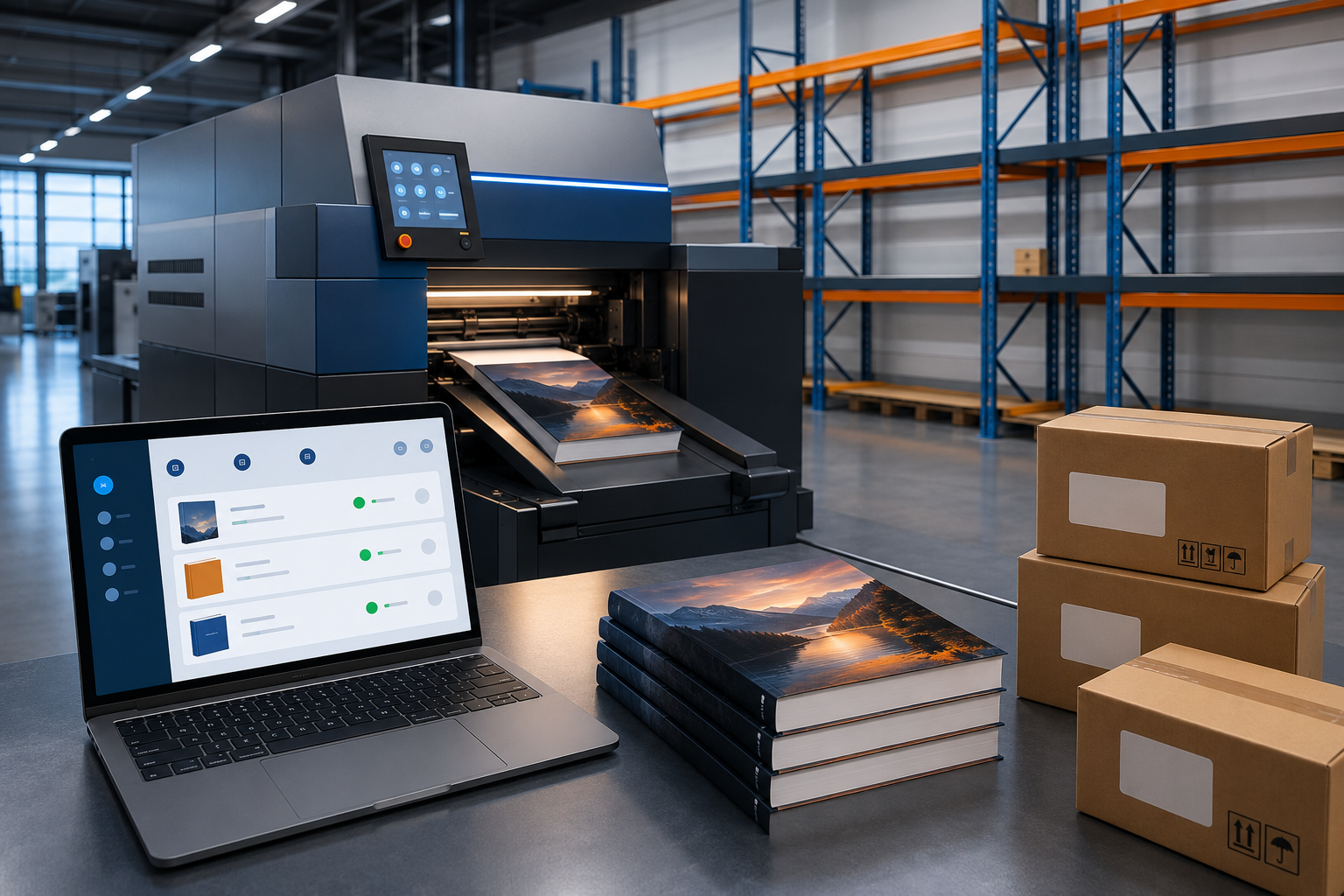
Maintaining a large inventory has traditionally been one of the biggest financial challenges in book publishing. Publishers often print thousands of copies to reduce the cost per book, but not every title sells as expected.
Unsold books occupy warehouse space, block working capital and may eventually become outdated or damaged. Modern print-on-demand and short-run digital printing provide publishers with a smarter alternative: producing books according to actual market demand.
This approach allows publishers to keep titles available without storing thousands of physical copies.
Why Is Traditional Book Inventory Risky?In the traditional model, publishers estimate future sales and print a large quantity in advance. If the forecast is accurate, bulk production can be economical. However, an incorrect estimate can create serious financial losses.
Publishers may face the following inventory problems:
- Large upfront printing investment
- Warehouse rent and maintenance
- Unsold and slow-moving books
- Damage caused by moisture, dust or handling
- Outdated editions remaining in stock
- Additional inventory-management expenses
- Blocked working capital
- Cost of destroying or recycling old books
The actual cost of a book therefore includes much more than its initial printing price.
What Is an Inventory-Free Printing Model?An inventory-free model allows publishers to print books only when they receive orders or observe confirmed demand. Digital files are stored securely, while physical copies are produced in small batches whenever required.
A publisher may keep only a limited number of popular titles ready for immediate dispatch. All other books can be printed according to regular sales, distributor requests or institutional orders.
Use Print-on-Demand ProductionPrint-on-demand allows a book to be produced after an order is received. The publisher stores a print-ready digital file instead of maintaining a large number of physical copies.
When a customer, bookstore or distributor places an order, the required copies are printed, bound, packed and dispatched. This model works particularly well for:
- Self-published books
- Academic and research publications
- Niche market titles
- Regional-language books
- Backlist and older titles
- Training manuals
- Frequently updated publications
Some publishers may not need single-copy production but still want to avoid large print runs. Short-run digital printing allows them to produce small batches such as 25, 50, 100 or 500 copies.
Once most copies are sold, another small batch can be produced. This creates a continuous replenishment system and prevents excess inventory.
Adopt a Demand-Based Reprinting SystemPublishers can use sales data to determine when a title should be reprinted. Instead of placing large orders based on assumptions, they can establish a minimum stock level for every title.
For example, if a book sells approximately 50 copies every month, the publisher might maintain only 30 to 60 copies. When the stock reaches a predetermined level, a new short-run order can be placed.
This approach helps balance product availability and inventory control.
Create a Digital Book ArchiveA well-organised digital archive is essential for inventory-free publishing. Every title should have final, approved and clearly labelled production files.
The archive should include:
- Print-ready interior PDF
- Complete cover file
- Book size and page count
- Paper specifications
- Binding and finishing instructions
- ISBN and barcode information
- Latest edition number
- Previous production records
When an order is received, the correct title can be sent to production without repeating the complete prepress process.
Advantages of Printing Without Inventory 1. Lower Financial RiskPublishers invest only in the copies they currently require. This reduces the possibility of losing money on books that fail to achieve expected sales.
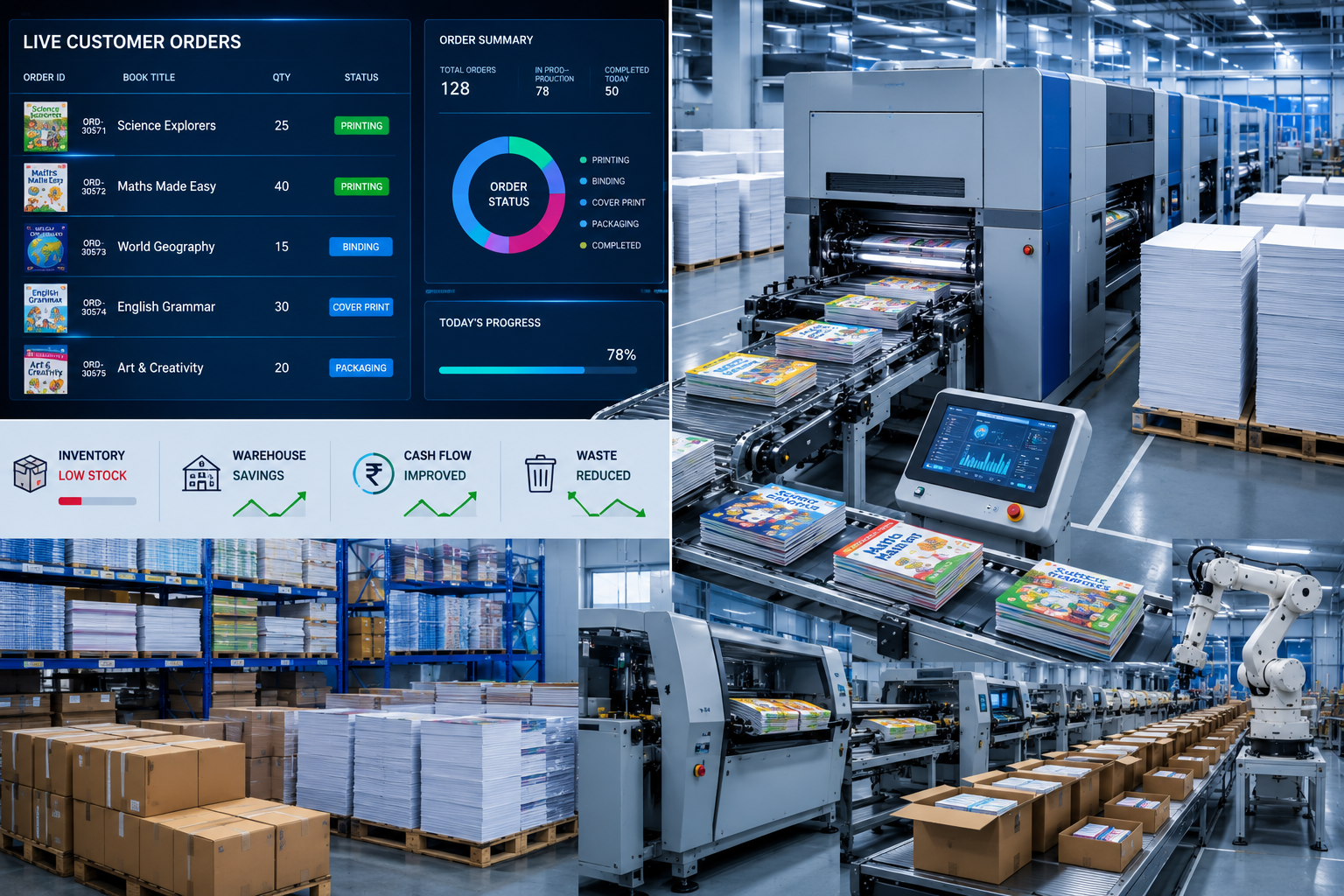
2. Reduced Storage CostsSmaller inventory requires less warehouse space, fewer employees and simpler stock management. These savings can be invested in marketing and developing new titles.
3. Better Cash FlowMoney is not blocked in thousands of unsold books. Publishers can use their available working capital for editing, design, promotion and business expansion.
4. Fewer Outdated BooksBooks containing changing information can be updated before the next batch is printed. This is valuable for textbooks, directories, legal publications, technical manuals and examination material.
5. More Titles Can Remain AvailableLow-demand and older titles do not need to be declared out of print. Their digital files can be preserved, allowing copies to be produced whenever required.
6. Reduced Paper WasteProducing books according to confirmed requirements reduces excess printing and unnecessary paper consumption. This supports a more responsible publishing model.
Print-on-Demand vs Bulk Inventory| Factor | Print-on-Demand | Bulk Inventory |
|---|---|---|
| Initial investment | Low | High |
| Storage requirement | Minimal | Large |
| Unsold stock risk | Very low | High |
| Content updates | Easy | Difficult after printing |
| Cost per copy | Better for small quantities | Lower for confirmed bulk demand |
| Financial flexibility | High | Limited |
Inventory-free production does not mean that bulk printing is never required. Large offset print runs may still be suitable when:
- A title already has confirmed high demand.
- A large institutional order has been received.
- Books are required for a fixed event or academic session.
- The content will remain unchanged for a long period.
- The publisher has a strong distribution network.
A hybrid strategy often produces the best results. Publishers can use bulk printing for established bestsellers and print-on-demand for new, niche or older titles.
How to Start Inventory-Free Book Production- Review the sales performance of every title.
- Identify slow-moving and unpredictable books.
- Prepare final print-ready digital files.
- Select a reliable digital printing partner.
- Order a physical sample for quality approval.
- Set minimum stock levels for every title.
- Monitor sales and schedule small reprints.
- Update files before producing new editions.
- Using inaccurate or outdated production files
- Ignoring the time required for printing and delivery
- Waiting until stock becomes completely unavailable
- Not checking sample quality
- Failing to track monthly title-wise sales
- Comparing only unit price and ignoring inventory costs
- Printing large quantities without confirmed demand
Publishers no longer need to maintain thousands of copies of every title. Print-on-demand, short-run digital printing and demand-based replenishment make it possible to keep books available while reducing inventory risk.
This model improves cash flow, reduces warehouse expenses, prevents unsold stock and allows publishers to manage more titles efficiently.
Edit One International provides professional digital book printing, short-run production and print-on-demand solutions for publishers, authors, educational institutions and businesses across India.
Want to print books without maintaining costly inventory? Contact Edit One International for a customised production solution.
Call or WhatsApp: +91-9871852545