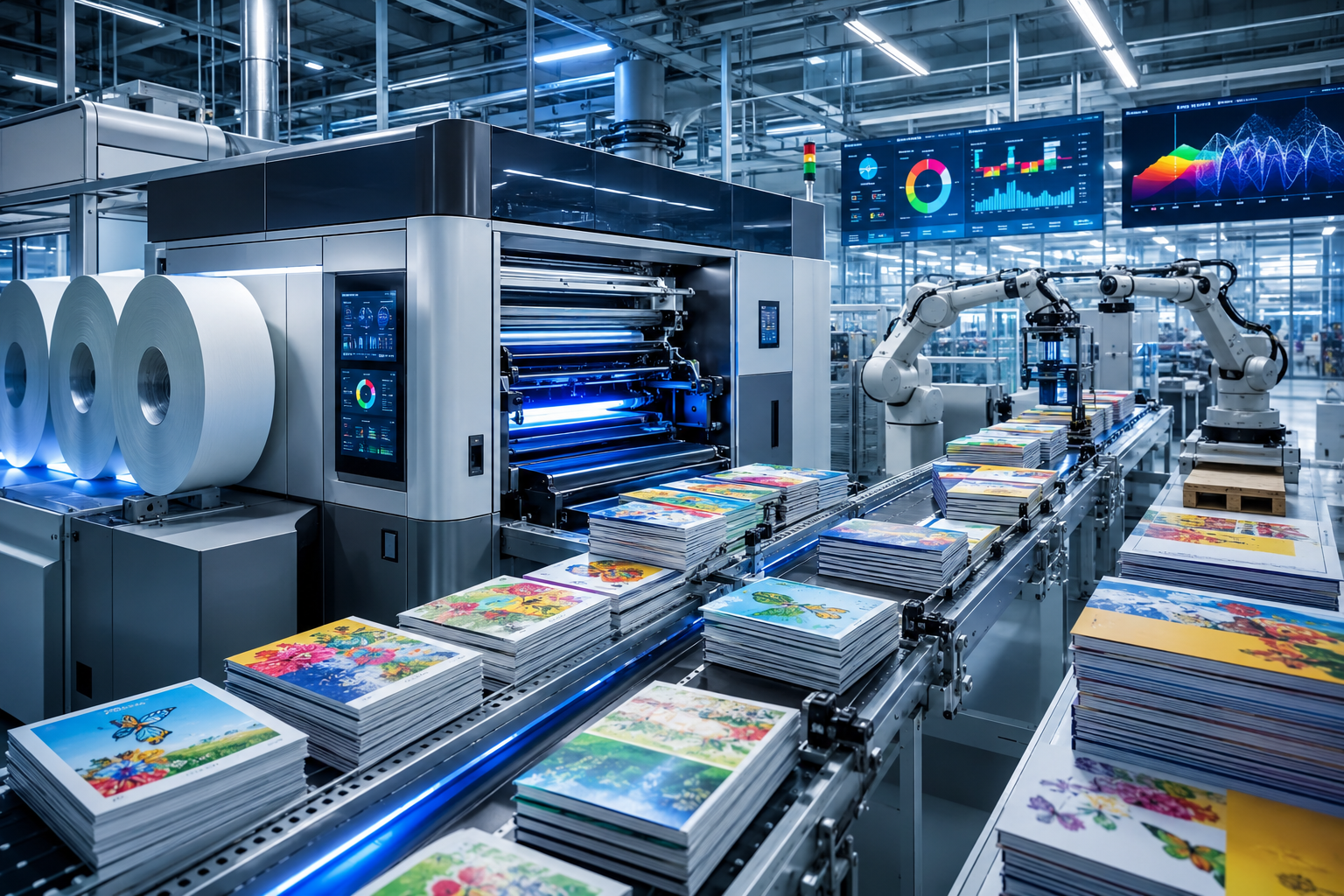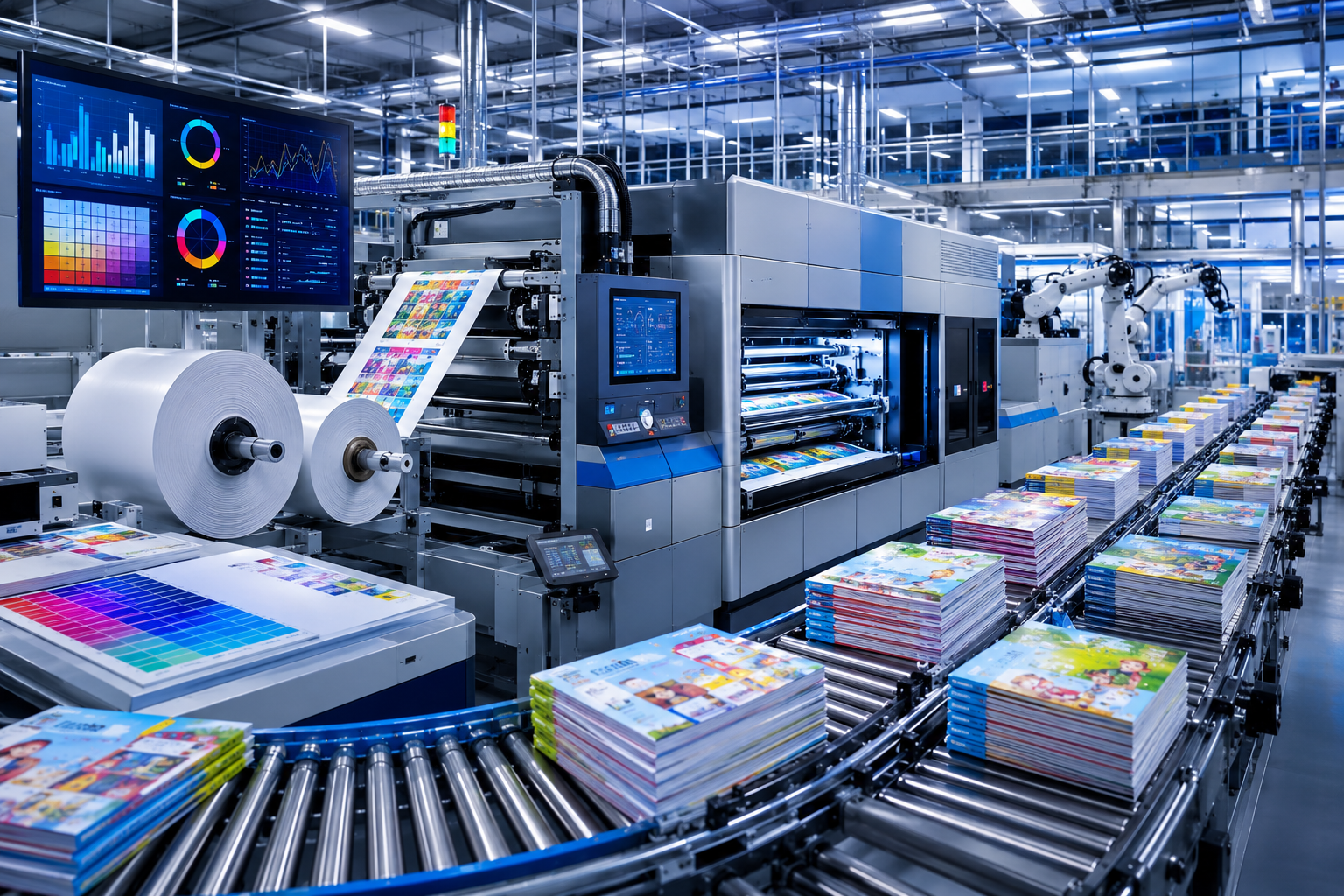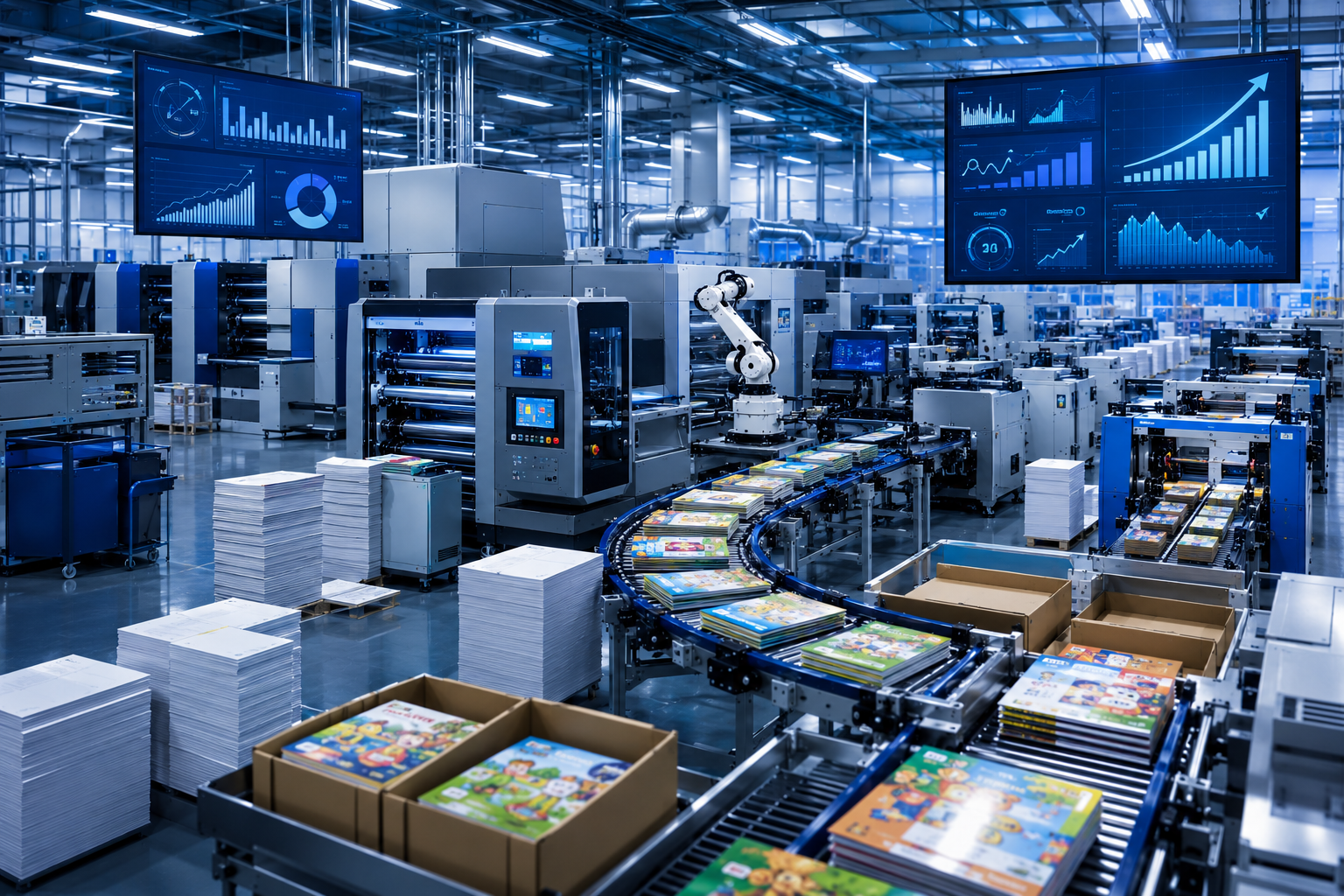
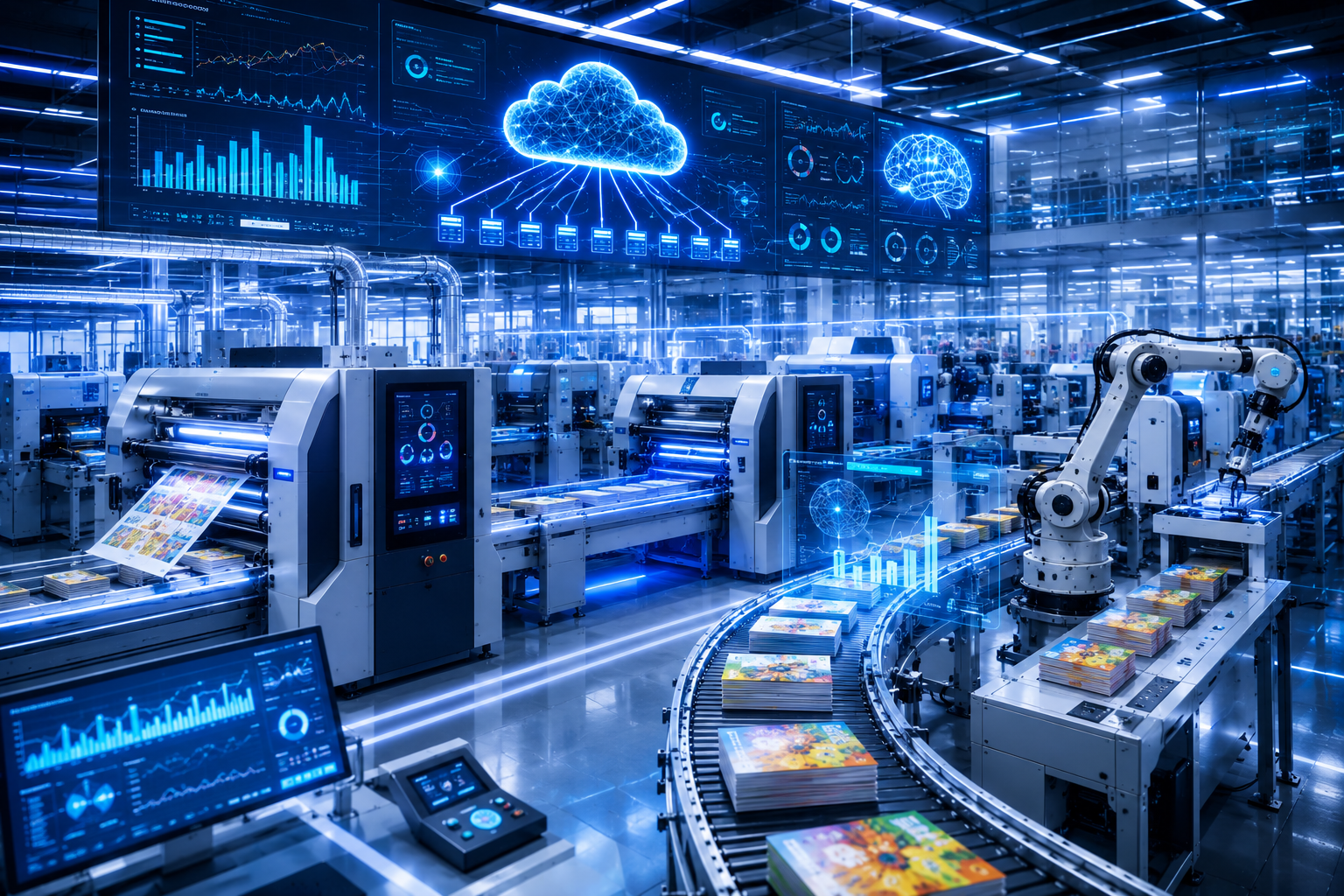
The printing industry is experiencing a major transformation driven by Artificial Intelligence (AI), workflow automation, and digital production technologies. Modern printing businesses are moving beyond traditional manufacturing methods and adopting intelligent systems that improve speed, accuracy, and profitability.
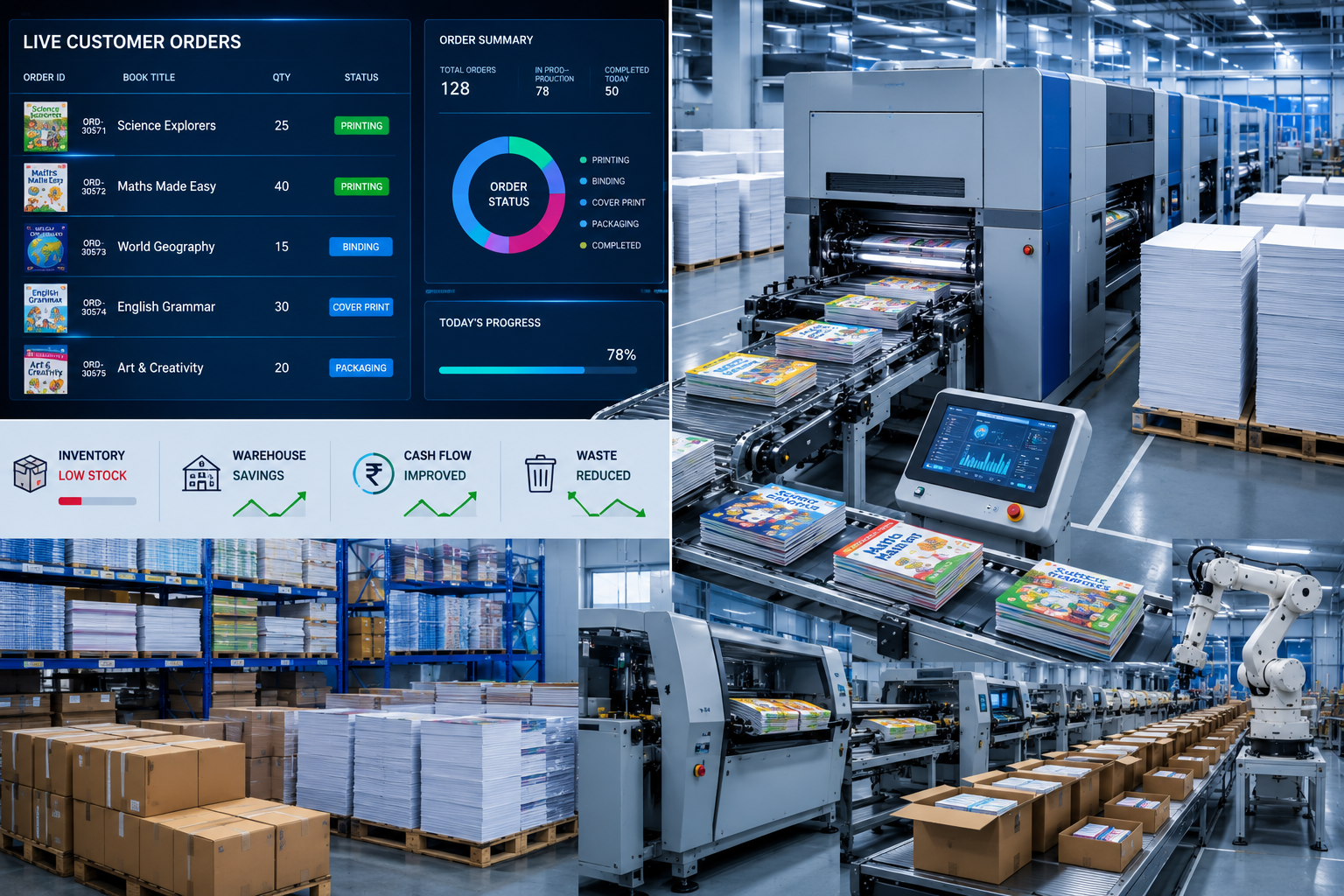
Why Automation MattersAutomation reduces repetitive manual work and enables faster production with fewer errors. From receiving customer orders to printing, binding, packaging, and dispatch, intelligent workflows streamline every stage of production.
Applications of AI in Printing- Automatic job scheduling
- Smart print queue management
- Color consistency monitoring
- Production analytics
- Predictive maintenance
- Order tracking
- Quality inspection
- Workflow optimization
- Faster production
- Lower operating costs
- Improved print quality
- Reduced production errors
- Higher customer satisfaction
- Better resource utilization
- Greater production efficiency
Modern digital presses work together with intelligent software to automatically process print files, monitor production, and optimize machine performance. This reduces downtime and helps businesses deliver books faster than ever before.
AI Supports Better Business DecisionsProduction data collected by intelligent systems helps business owners understand machine utilization, production capacity, operating costs, and future investment opportunities.
The Future Is ConnectedCloud-connected production systems, AI-powered analytics, and digital automation are becoming essential for commercial printing companies that want to remain competitive in a rapidly evolving publishing industry.
Partner with Edit One InternationalEdit One International provides advanced commercial printing technologies designed to help publishers modernize production, improve efficiency, and prepare for the future of digital manufacturing.
Book a Live DemonstrationContact our experts to learn how AI-enabled digital printing technology can transform your publishing business and increase productivity.
ConclusionArtificial Intelligence and automation are no longer optional—they are becoming the foundation of modern commercial printing. Businesses that embrace these technologies today will lead the printing industry tomorrow.